
Healing Gums After Tooth Removal: A Recovery from Day 1 to Full Healing
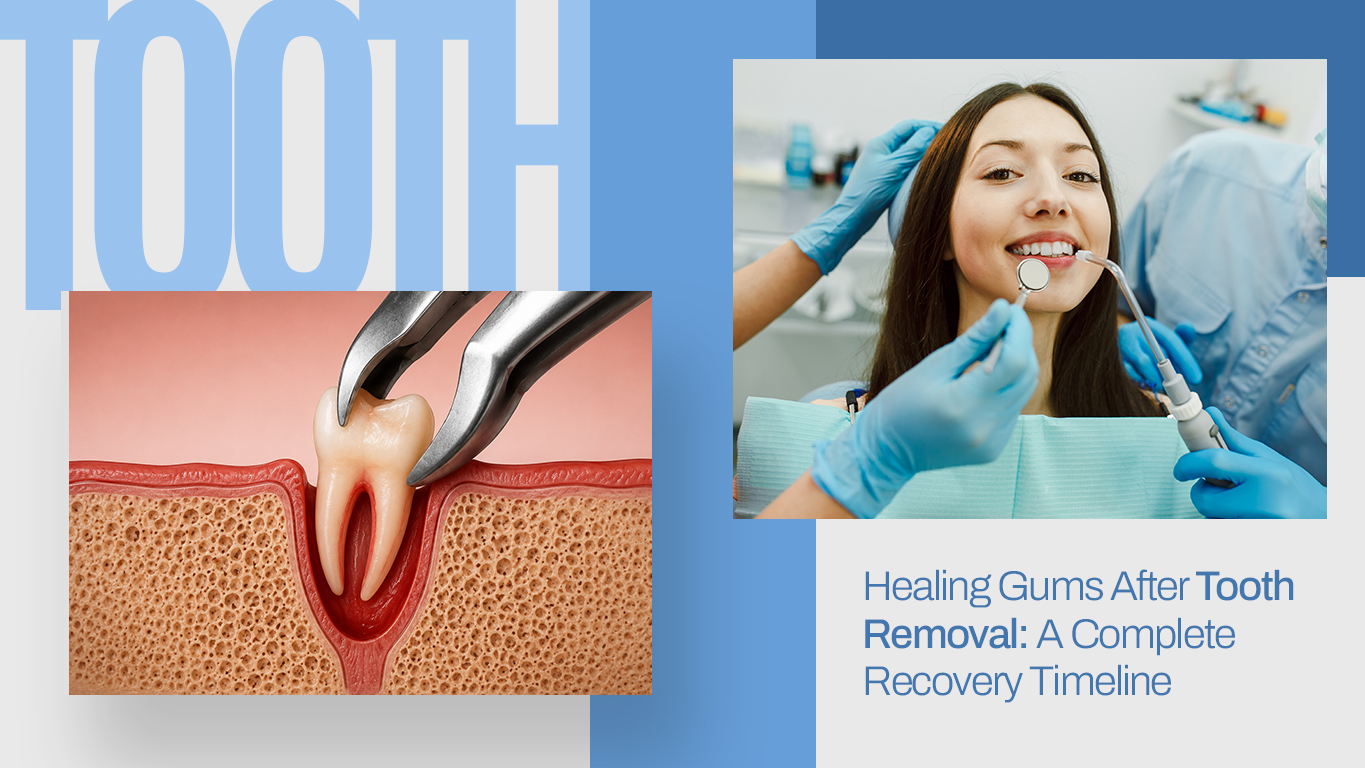
Having a tooth removed can feel a little daunting, but the good news is that your body is remarkably good at healing itself. Whether you’ve just had a simple extraction or a more complex procedure, knowing what to expect during recovery can make the whole experience far less stressful. From the first tender hours to the day you’re back to eating your favourite foods without a second thought, this guide explains healing gums after tooth removal, what to expect during recovery, and how each stage progresses so you know exactly what’s normal.
What is the First Step After Tooth Removal?
As soon as you get a tooth pulled out, the body goes into repair mode. Within a few hours, a blood clot is formed in the empty socket. This clot is very important as it safeguards the underlying bone and nerve endings and is the bedrock on which new tissue grows. Avoid spitting hard, using straws, or smoking in the first few days, as this can be a painful condition known as dry socket and dislodge it.
Gum Healing After Tooth Extraction: Day by Day Timeline
Day 1-3: Clot Formation & Initial Swelling
The first 24-72 hours of healing of the gums after tooth extraction are critical. Anticipate swelling, slight bleeding, and discomfort around the socket. An ice pack applied to the cheek for 20 minutes at a time will decrease swelling. Eat only soft food, such as soup, yoghurt, and mashed potato.
Day 3-7: Early Tissue Repair Phase
The first pain should start to resolve after day three. The blood clot begins to change to soft granulation tissue, the body’s natural scaffolding for healing. This is when many patients ask, “How long do gums take to heal after tooth extraction?” While the socket may appear partially closed after the first week, complete healing continues beneath the surface.
Week 2–3: Gum Closure
During weeks two and three, tooth healing gum tissue continues to develop rapidly. The soft tissue fills the extraction site, the opening becomes smaller, and discomfort continues to decrease. Sensitivity decreases significantly. Slowly add in solid foods, chewing on the other side.
Week 4 – 8: Advanced Bone Remodelling
Usually, the exposed gum surface tightens completely in 4 to 6 weeks. But full recovery (including the bone) takes much longer. Over 3-6 months, the bone in the socket remodels and fills in. This is a normal part of how to heal gums after tooth removal and isn’t something to be alarmed about.
How to Heal Gums After Tooth Removal
- After the 2nd day, wash gently with warm salt water.
- For at least the first 2 weeks, do not eat hard, crunchy, or sticky food.
- Follow your dentist’s instructions for taking medications
- Avoid smoking, because nicotine hinders gum healing to a great extent.
- Attend dental appointments to allow the dentist to monitor recovery
Timely Dental Care Advice
If the pain is very severe after day three, or you notice a bad smell coming from the socket, the bleeding hasn’t stopped, or you have a fever, reach out to your dental clinic right away. These can be signs of infection or dry socket, which should be treated by a professional right away.
Conclusion
A tooth extraction recovery can be a slow but very easy process. Most patients experience successful gum healing after tooth extraction within a few weeks when they follow proper aftercare instructions. Every healing gums after tooth removal journey is different, but maintaining good oral hygiene and following your dentist’s advice will support a healthy recovery.
At Springvale Dental Clinic, we offer expert tooth extraction and personalised care following the extraction. From initial recovery until you’re completely healed, our experienced staff will be with you every step of the way, making your comfort and oral health our top priority. Visit us today.