Having your wisdom teeth removed is a standard dental procedure that many people experience. While the extraction is performed under anesthesia, the following recovery period requires careful attention to ensure proper healing and minimal discomfort. At Springvale Dental Clinic, we understand that a smooth recovery is as important as the procedure. This guide provides comprehensive aftercare instructions to help you navigate the days following your wisdom tooth extraction.
The initial 24 hours after your wisdom tooth extraction are crucial for establishing the foundation of your healing process.
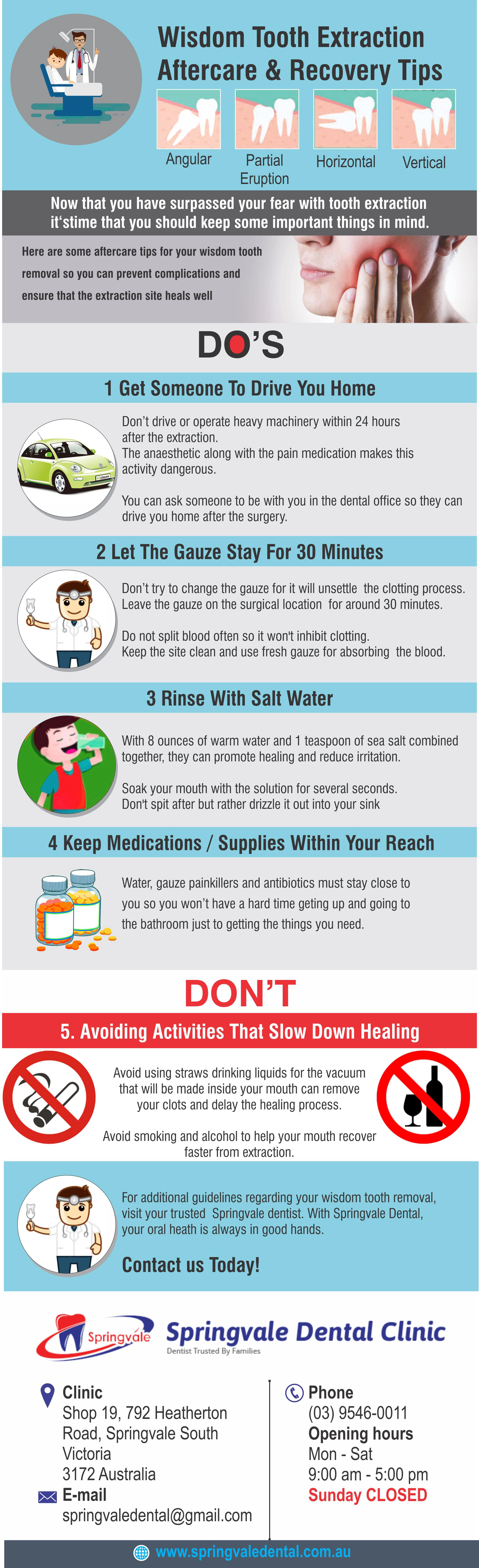
Managing Bleeding: Some bleeding is normal during the first day. Gently bite down on gauze pads placed over the extraction site for 30-45 minutes. If bleeding persists, replace with fresh gauze and apply pressure. A moistened tea bag can also be practical due to the tannic acid, which helps blood clots form.
Swelling Reduction: Apply an ice pack to your cheek for 20 minutes, followed by 20 minutes off. Continue this routine for the first 24 hours to minimize swelling and discomfort.
Rest is Essential: Plan to rest for at least 24 hours after your procedure. Avoid strenuous activities that might dislodge the blood clot or increase bleeding.
Medication Timing: Take prescribed pain medication as directed before the anesthesia wears off completely to stay ahead of any discomfort.
Recovery Tips for the First Week
As you progress beyond the first day, these guidelines will help ensure continued healing:
Sleep Position: Sleep with your head elevated for the first few nights to reduce swelling and prevent prolonged bleeding.
Avoid Suction: Do not use straws, smoke, or create any suction in your mouth for at least 72 hours, as this can dislodge blood clots and lead to dry socket—a painful condition that delays healing.
Skip the Gym: Postpone exercise for at least 3-5 days. Physical activity increases blood pressure, which can lead to increased bleeding and pain at the extraction site.
Limit Talking: Excessive talking or movement of your jaw during the first 24-48 hours may increase discomfort.
Pain Management Strategies
>Managing pain effectively is key to a comfortable recovery:
Follow Medication Instructions: Take all prescribed antibiotics until finished, even if you feel better. For pain medications, follow your dentist's instructions precisely.
Natural Alternatives: Some patients find relief from gentle saltwater rinses (starting 24 hours after surgery) or clove oil applied carefully to the area. Always consult with your dentist before using any natural remedies.
Temperature Transition: After 24 hours, switch from cold therapy to warm compresses to help reduce jaw stiffness and promote healing.
Nutrition During Recovery
Your food choices can significantly impact your healing process:
First 48 Hours: Stick to cool soft foods like yogurt, smoothies (without straws), mashed potatoes, and applesauce.
Gradually Expand: As you feel more comfortable, incorporate lukewarm soups, scrambled eggs, and soft pasta.
Foods to Avoid: Steer clear of crunchy, spicy, acidic, or grainy foods that could irritate the surgical site or become lodged in the socket.
Stay Hydrated: Drink plenty of water, but avoid alcoholic, caffeinated, or hot beverages during the initial recovery period.
Oral Hygiene After Extraction
Maintaining cleanliness without disrupting healing is a delicate balance:
First 24 Hours: Avoid rinsing or spitting, as these actions can dislodge blood clots.
Day 2 and Beyond: Gently rinse with warm salt water (1/2 teaspoon salt in 250ml warm water) 4-5 times daily, especially after meals.
Brushing: Continue brushing your teeth, but avoid the extraction sites for the first 24 hours. After that, brush gently near the surgical areas.
Warning Signs to Watch For
Be alert for these potential complications:
Excessive Bleeding: Bleeding that continues despite pressure or increases after 24 hours.
Severe Pain: Pain that worsens after 2-3 days rather than gradually improving.
Fever: Temperature above 38°C may indicate infection.
Persistent Numbness: Lingering numbness beyond the expected timeframe discussed with your dentist.
Difficulty Swallowing or Breathing: Seek immediate medical attention if you experience these symptoms.
When to Call Your Dentist
Don't hesitate to contact us if you experience:
Dislodged Blood Clot: Signs include increased pain and a visible empty socket.
Swelling That Worsens: Increasing swelling after 2-3 days may indicate infection.
Unusual Discharge: Pus or foul taste from the extraction site.
Medication Concerns: Adverse reactions to prescribed medications or insufficient pain relief.
The Road to Full Recovery
Complete healing of the socket can take several weeks, though most patients return to normal activities within a week. The bone and gum tissue will gradually fill in the socket over the coming months.
We're Here to Support Your Recovery
At Springvale Dental Clinic, we're committed to providing exceptional care throughout your wisdom tooth extraction journey. Our experienced team is available seven days a week, from 9 am to 5 pm, to address any concerns during your recovery. Located at Shop 22, 792 Heatherton Road, Springvale South Victoria 3172, we offer comprehensive dental services in a comfortable, patient-centered environment.
If you're experiencing wisdom tooth pain or have questions about extraction, don't hesitate to book a consultation. Your comfort and health are our top priorities, and we're here to ensure your wisdom tooth experience is as smooth and painless as possible.