
Why Do Your Teeth Hurt When Eating Sweets? Hidden Causes You Should Know
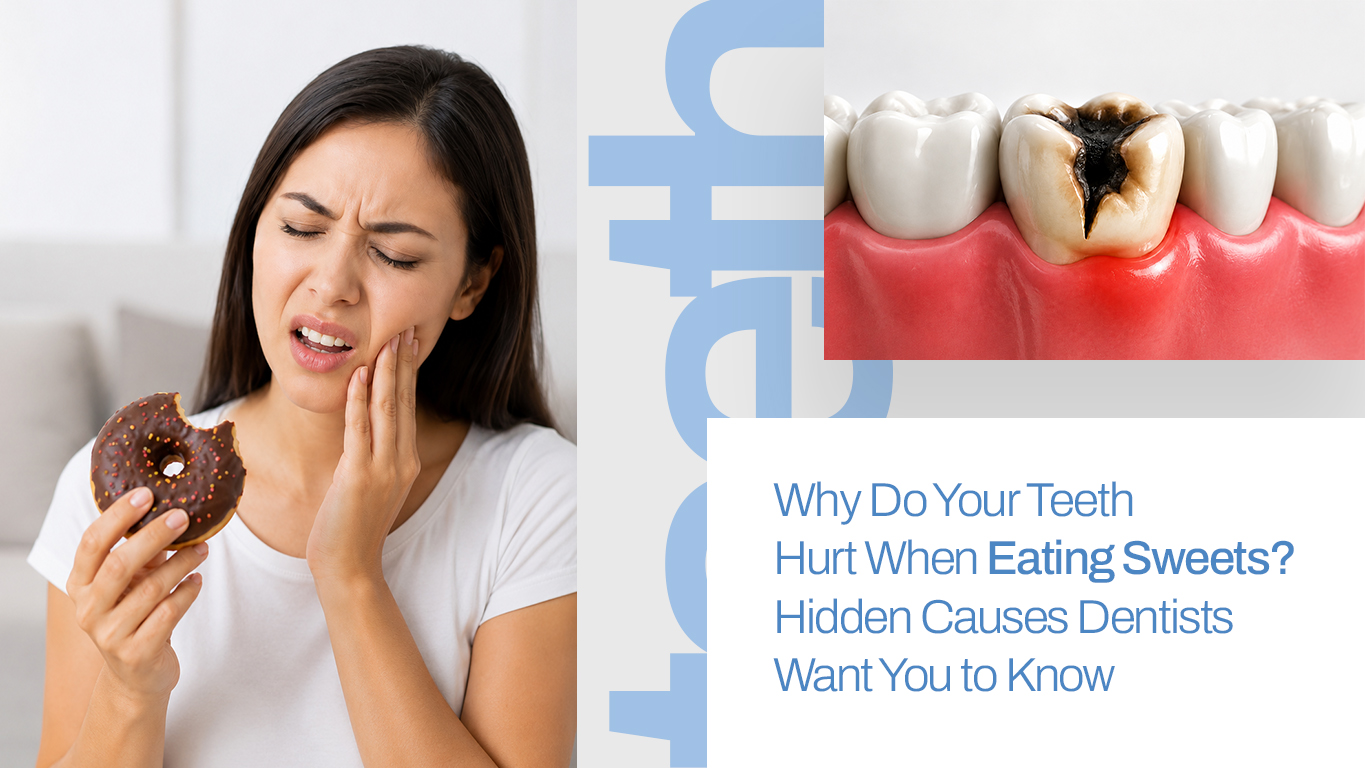
You’re eating a piece of chocolate or a handful of lollies, and there it is. The teeth hurt when eating sweets. That cold little sting that makes you flinch. When your teeth start to ache after consuming sweets, you can easily shrug it off as nothing. However, that sting is typically your mouth’s way of waving a little flag to get your attention before a minor problem turns into a painful issue.
Why is Sugar Bad for the Teeth?
The answer is simple: Sugar, per se, is not a cause of pain, but it does create the conditions for pain. The bacteria in your mouth eat the sugars in candy and make acids. This acid breaks down the outside covering of your teeth, which is known as the enamel. When the enamel wears down, the dentin below is exposed, which is when tooth pain when eating sweets starts.
Why Tooth Sensitive to Sweets Can be Hidden Causes?
When you find yourself wondering, “why do my teeth hurt when eating candy?” one of these is the culprit.
- Dental caries and dental cavities. Cavity (hole) in the tooth that bacteria have penetrated. One of the main reasons teeth are painful when eating candy is the settling of sugar in these gaps.
- Enamel erosion. Over the years, sugary and acidic foods erode enamel. Sweets will be able to get to the nerves more easily with thinner enamel.
- Gum recession. As gums recede, the root of the tooth is exposed. Unlike enamel, roots are not as resistant to sugar and are much more reactive when teeth are sensitive to sugar.
- Fillings that have cracks or chips in them. Old or chipped fillings let sweets and bacteria in underneath and irritate the nerve resulting in sudden pain.
- Worn-down teeth. Grinding or clenching, which can happen while sleeping, flattens and weakens teeth, leading to tooth sensitivity to sweets.
How to Ease the Pain
Using a soft bristle toothbrush and a toothpaste that is formulated to help sensitive teeth can be a significant improvement in daily comfort. Consuming fewer sugary foods and swishing water around after meals reduces any further acid buildup. Routine dental exams are vital as well, because any issues can be identified and addressed early on.
When to See a Dentist
Sometimes, twinges will improve by themselves but if there are constant twinges it should never be overlooked. If there is pain that continues to recur while eating sweets, or if the pain is stabbing and persists after meals, it may indicate decay or an involvement of nerves. This is evidence that professional help is necessary sooner than later. Early booking is always the wise decision to avoid minor problems becoming a lot more serious, costly and difficult to treat later.
Conclusion
A little ache from sugar is a warning, not background noise. If you have been wondering why does sugar hurt my teeth, the smartest move is a proper assessment. At Springvale Dental Clinic, our friendly team will track down what is really going on and get you back to comfortable, gentle care and all. Book in today and get back to enjoying your favourite treats without the wince.