
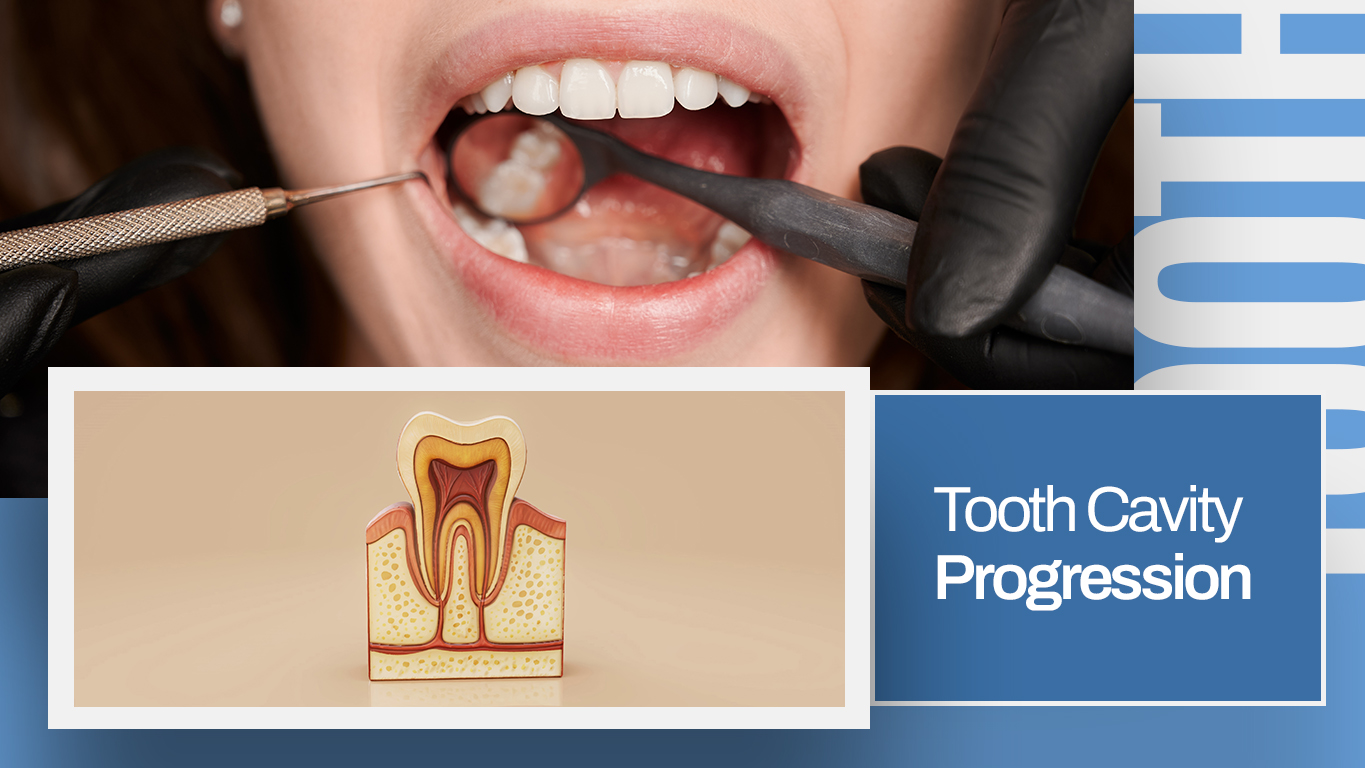
Have you ever wondered how a tiny spot on your tooth can turn into a painful dental emergency? Tooth decay doesn't happen overnight – it's a progressive condition that develops in stages, often silently, until it reaches an advanced state. Understanding this progression can help you identify problems early and seek treatment before they become serious concerns.
The journey of a cavity begins with demineralization – a process where the tooth enamel (the hard, protective outer layer) starts to lose minerals due to acid attacks. This acid comes from bacteria in your mouth that feed on sugars and starches from food and drinks.
You might notice a small white spot on your tooth at this earliest stage. This spot indicates where the enamel surface has lost calcium and phosphate minerals. The good news? At this point, the decay process can be reversed with proper oral hygiene and fluoride treatments that help remineralize the enamel.
If demineralization continues unchecked, the enamel begins to break down. The white spots may darken to a brownish color, and small holes – the first true cavities – begin to form. Unlike the previous stage, once the enamel has been damaged to this extent, the body cannot repair it naturally. Professional treatment becomes necessary. However, you still might not feel any pain or discomfort at this stage, so regular dental check-ups are crucial for early detection.
Beneath your enamel lies dentin – a softer, more sensitive layer of tissue. When tooth decay reaches this level, the progression speeds up significantly, as dentin is less acid-resistant than enamel.
This is typically when you'll start experiencing symptoms:
The dentin contains tiny tubes communicating with the tooth's nerve, which is why you begin feeling sensitive at this stage. Without treatment, bacteria and acid will continue their destructive path deeper into the tooth.
The dental pulp is the innermost part of your tooth, containing nerves and blood vessels. When decay reaches this level, it causes inflammation and irritation of the pulp tissue, leading to pulpitis.
Symptoms become more severe and persistent:
At this stage, treatment often requires root canal therapy to remove the infected pulp and save the tooth structure.
In the final and most serious stage of tooth decay, bacteria from the infected pulp spread beyond the tooth's roots and into the surrounding tissues. This leads to an abscess – a pocket of pus caused by bacterial infection.
Dental abscesses are serious conditions that can cause:
Without immediate treatment, the infection can spread to other parts of your body, potentially becoming life-threatening.
The progression from a tiny white spot to a dangerous abscess can happen over months or years, depending on your oral hygiene, diet, and genetic factors. The best strategy is prevention:
The earlier a cavity is detected and treated, the simpler and cheaper the solution. Early-stage cavities might only require a small filling, while advanced decay could necessitate root canals, crowns, or even extractions.
This progression highlights why the "wait until it hurts" approach to dental care is problematic – when pain occurs, the damage is often extensive.
At Springvale Dental Clinic, we're committed to helping you maintain optimal oral health and catching potential problems at their earliest stages. Our experienced team provides comprehensive dental care for patients of all ages, from preventive services to advanced restorative treatments.
We understand that dental concerns don't always occur during business hours, so we're proud to offer convenient appointment times seven days a week from 9 am to 5 pm. Whether you need a routine check-up or have concerns about a potential cavity, our friendly team is here to help.
Don't wait until a small problem becomes a painful emergency. Contact Springvale Dental Clinic today to schedule your appointment. We're conveniently located at Shop 22, 792 Heatherton Road, Springvale South Victoria 3172, Australia, with ample parking.
Your smile deserves the best care possible – let us help you keep it healthy for life.
