We've all been brushing our teeth since childhood, but are you doing it correctly? At Springvale Dental Clinic, we regularly see patients who diligently brush their teeth twice daily yet still develop cavities and gum disease. The culprit? Common brushing mistakes that undermine their oral hygiene efforts. Here's our comprehensive guide to the tooth brushing errors you should avoid for optimal dental health.
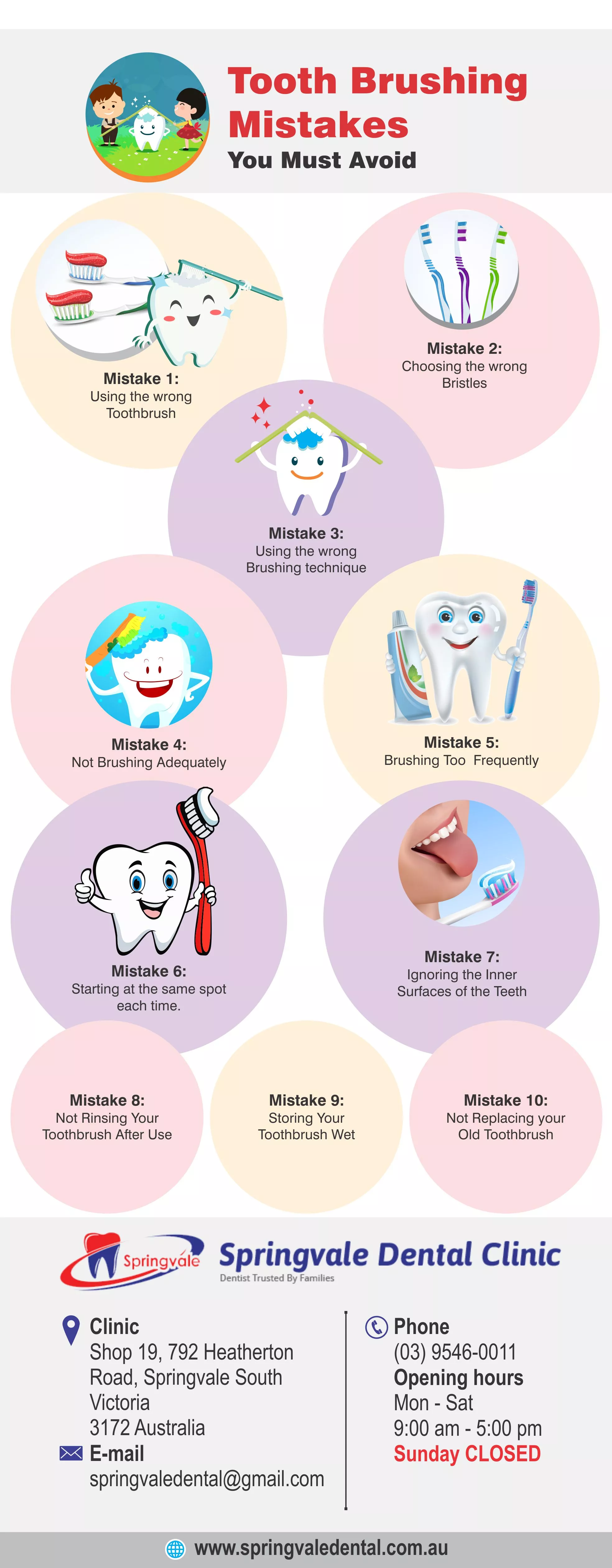
Many believe firmer bristles provide better cleaning, but this is a dangerous misconception. Hard-bristled toothbrushes can:
Solution: Choose a soft-bristled toothbrush that can effectively clean your teeth and gums while being gentle. Most dental professionals recommend soft or extra-soft bristles for daily use.
Scrubbing vigorously might seem the best way to remove plaque, but aggressive brushing can cause significant damage. This mistake often leads to:
Solution: Use gentle, circular motions rather than sawing back and forth. Let the bristles do the work—you don't need to apply much pressure to remove plaque effectively.
The Australian Dental Association recommends brushing for two full minutes, but many people brush for only 30-45 seconds. Inadequate brushing time means plaque remains on tooth surfaces.
Solution: Time yourself or use an electric toothbrush with a built-in timer. Divide your mouth into four quadrants and spend 30 seconds on each.
Simply moving your toothbrush around aimlessly won't effectively clean your teeth. Common technique errors include:
Solution: Hold your brush at a 45-degree angle to your gums and use short, gentle circular motions. Be methodical—develop a consistent pattern to ensure you cover all surfaces.
A worn-out toothbrush cannot clean effectively. Frayed bristles don't reach between teeth properly and harbor more bacteria.
Solution: Replace your toothbrush or electric toothbrush head every 3-4 months or sooner if the bristles become frayed or splayed.
Acids from foods and beverages temporarily soften your enamel. Brushing right after consuming acidic items like citrus fruits, tomatoes, or soft drinks can damage this weakened enamel.
Solution: Wait 30-60 minutes after consuming acidic foods before brushing. Rinse with water in the meantime to help neutralize acids.
Your tongue harbors bacteria that can cause bad breath and transfer to your freshly cleaned teeth.
Solution: Gently brush your tongue or use a tongue scraper daily. Start at the back and work forward with light pressure.
A large stripe of toothpaste might look like what you see in advertisements, but it's excessive. Too much can create excess foam that encourages you to spit before brushing thoroughly.
Solution: A pea-sized amount of fluoride toothpaste is sufficient for adults. Use just a smear the size of a grain of rice for children under three.
Immediately rinse with water after brushing, and wash away the protective fluoride from toothpaste that continues working after you brush.
Solution: Spit out excess toothpaste without rinsing. If you must rinse, use a fluoride mouthwash rather than water.
Keeping your toothbrush in a closed container creates a moist environment for bacterial growth.
Solution: Store your toothbrush upright in an open container, allowing it to air dry completely between uses. Please keep it away from the toilet to avoid airborne contamination.
Even perfect brushing can't reach the spaces between teeth, leaving up to 40% of your tooth surfaces uncleaned.
Solution: Use interdental brushes or a water flosser to clean between teeth daily. These tools complement brushing and reach areas your toothbrush can't.
Many people brush immediately after waking up but before breakfast, then don't brush again until bedtime, leaving food particles on their teeth all day.
Solution: While brushing twice daily is the minimum, the most strategic times are after breakfast and before bed. If possible, brushing after lunch offers additional protection.
While proper brushing is essential for maintaining oral health, regular professional cleanings and checkups remain crucial. At Springvale Dental Clinic, our experienced team can provide personalized guidance on your brushing technique and help address any existing dental issues before they become serious problems.
We invite you to our modern facility at Shop 22, 792 Heatherton Road, Springvale South Victoria 3172, Australia. For your convenience, we're open seven days a week from 9 am to 5 pm, making it easy to schedule appointments that fit your busy lifestyle.
Contact us today to book your next dental checkup and learn more about optimizing your oral hygiene routine for a healthier, brighter smile.