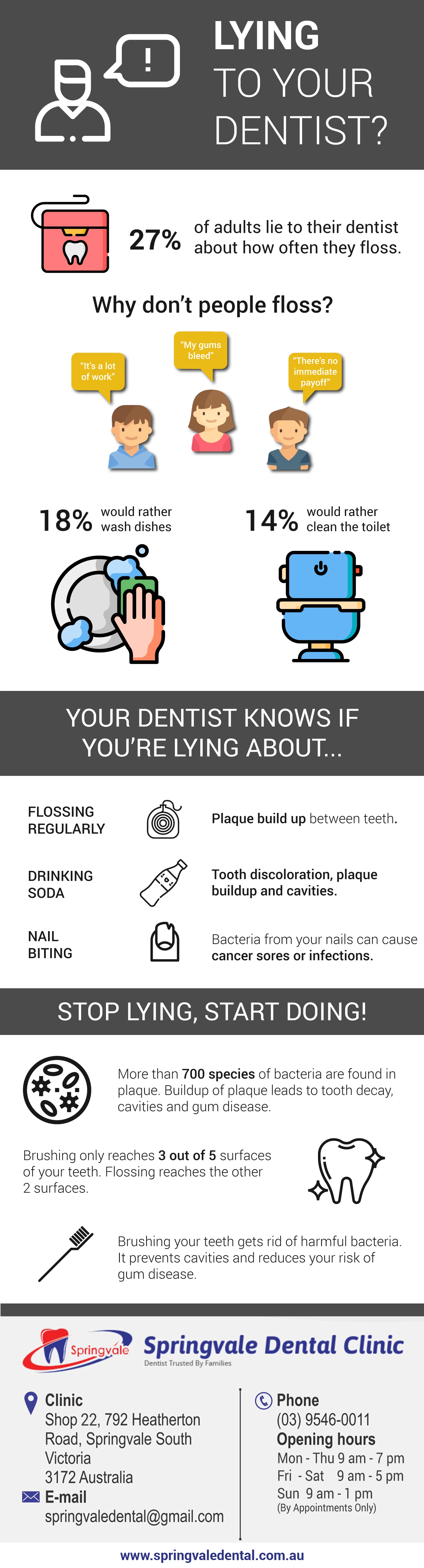
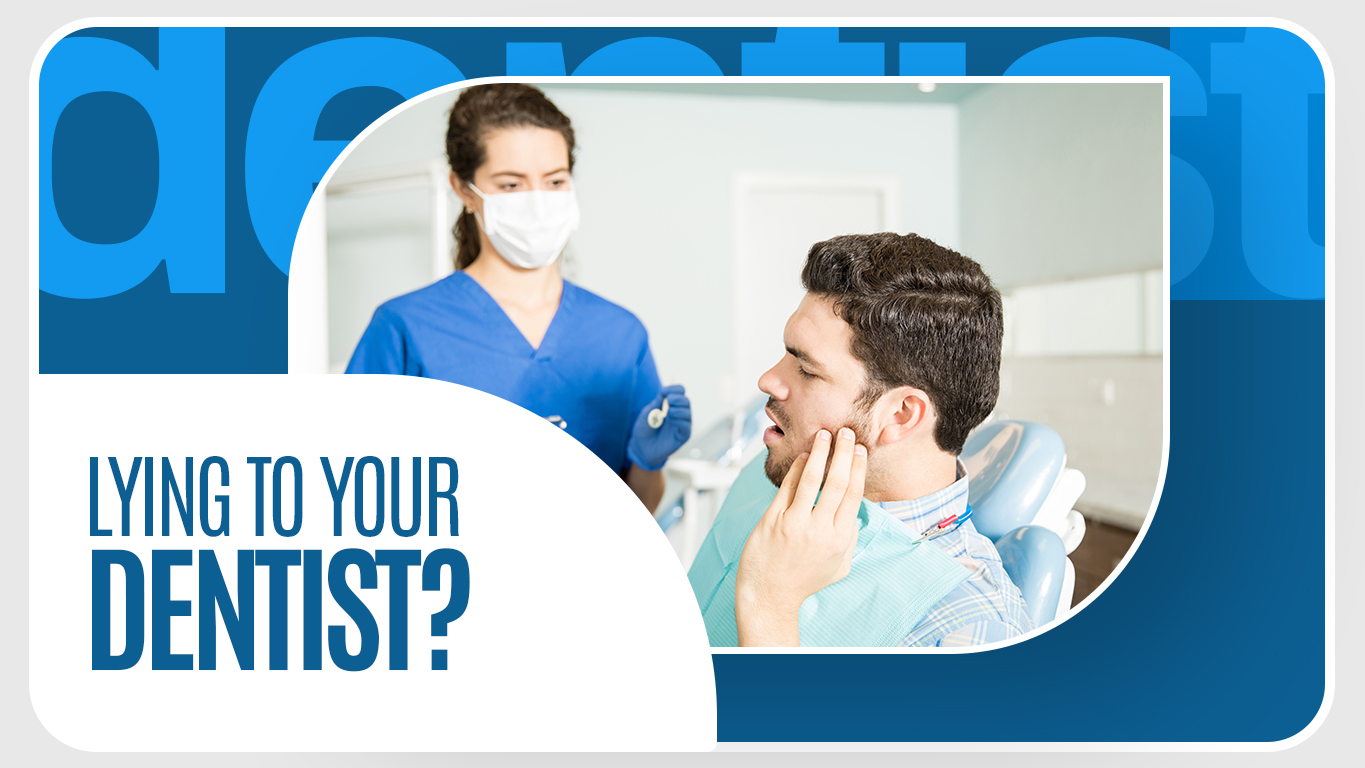
We've all been there – sitting in the dental chair, anxious as the dentist asks, "How often do you floss?" Before you know it, you hear yourself saying "every day" even though that bathroom floss pack has barely been touched in months. It's a common scenario in dental offices worldwide, including Springvale South.
Dental professionals have heard it all. From claiming to brush twice daily when it's more like once (on a good day) to insisting that the sugary drink habit is "just occasional," patients often bend the truth during dental visits. Some common fibs include:
These might seem harmless white lies, but can significantly impact dental care and overall health.
Understanding why patients aren't sincere is key to addressing the issue. Most often, it's not malicious – it's human nature. People may feel embarrassed about poor habits or fear being judged. Some worry about receiving a lecture or feel guilty about neglecting previous dental advice. Others might minimize symptoms, hoping the problem will resolve itself and avoid potentially uncomfortable or expensive treatments.
Dental anxiety is another significant factor. For many, the mere thought of dental work triggers fear that can lead to avoiding full disclosure of symptoms or problems.
When you withhold information from your dentist, you work against your best interests. Here's why honesty is crucial:
Establishing honest communication with your dental team benefits everyone involved. Here are some tips to help:
The relationship between you and your dentist works best as a partnership. Your dentist brings clinical expertise and experience while you provide crucial information about your symptoms, habits, and concerns. Together, this creates the foundation for optimal oral health.
Being truthful doesn't mean you'll be subjected to judgment or scolding. Modern dental practices understand that everyone faces challenges in maintaining perfect oral health routines. The goal isn't perfection but progress toward healthier habits and better outcomes.
Beyond improving your dental care, being honest with your dentist can reduce anxiety in the long run. When issues are addressed early, treatments are typically less invasive, less expensive, and less time-consuming than when problems are allowed to progress.
Additionally, your oral health is connected to your overall well-being. Conditions like gum disease have been linked to serious health issues, including heart disease and diabetes. By being forthright about your dental health, you're also taking an essential step toward protecting your general health.
At Springvale Dental Clinic, we've created an environment where patients feel comfortable being honest about their oral health habits and concerns. Our team understands the challenges of maintaining perfect dental routines and focuses on practical, judgment-free support to improve oral health.
We're conveniently located at Shop 22, 792 Heatherton Road, Springvale South Victoria 3172, and uniquely positioned to accommodate your busy schedule by remaining open seven days a week from 9 am to 5 pm. This accessibility means you never have to wait long for an appointment or put off addressing dental concerns.
Whether you're due for a check-up or have been avoiding the dentist due to anxiety or past habits, we welcome you to visit us and experience dental care built on trust, understanding, and partnership. The most important thing isn't that you've been perfect; you're here now, ready to take the next step toward better oral health.