Dental crowns represent one of dentistry's most versatile and practical solutions when restoring damaged teeth. At Springvale Dental Clinic, we believe in providing our patients comprehensive information about their treatment options. This article explains everything you need to know about dental crowns, from what they are to how they can benefit oral health.
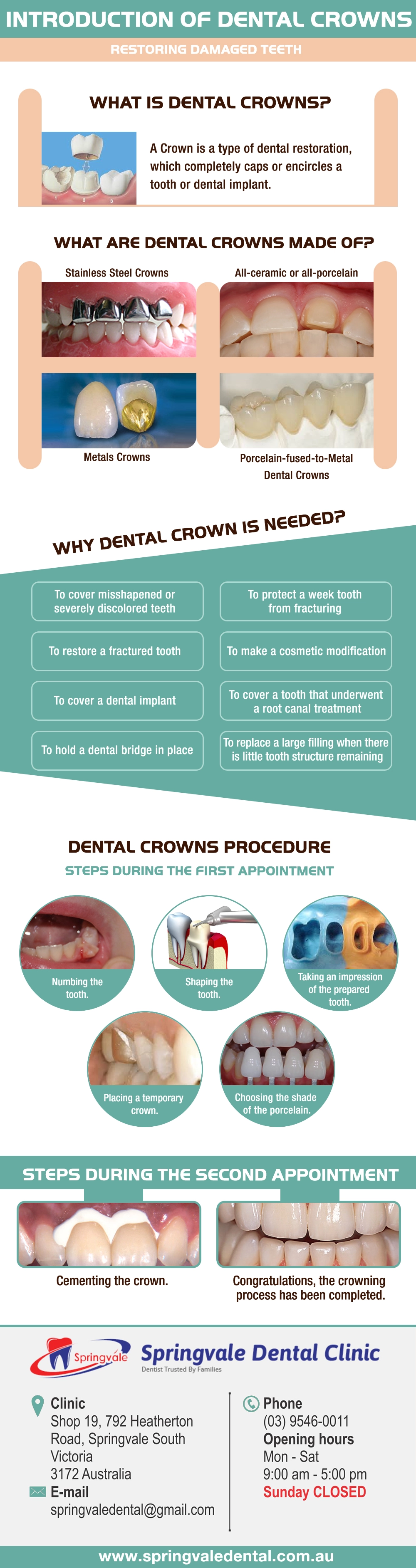
Dental crowns, often called "caps," are custom-made restorations completely covering a damaged or weakened tooth. These prosthetic devices are cemented onto existing teeth or implants, fully encasing the visible portion of the tooth that lies at and above the gum line. Crowns restore a tooth's shape, size, strength, and appearance while protecting the underlying tooth structure.
Unlike fillings, which replace just a portion of a tooth, crowns provide complete coverage and protection for the entire visible part of the tooth. They're designed to look and function like natural teeth, blending seamlessly with your smile.
Dental crowns serve various purposes and are recommended in several situations:
Your dentist may recommend a crown if you have significant tooth decay, a fractured tooth, or after specific dental procedures like root canal therapy.
Modern dentistry offers several types of crown materials, each with its advantages:
Porcelain or ceramic crowns provide the best natural color match and are an excellent choice for front teeth. These metal-free options are particularly suitable for patients with metal allergies.
Porcelain-fused-to-metal crowns combine strength and aesthetics. They have a strong metal base covered with porcelain that matches the color of adjacent teeth.
Gold alloy crowns are known for their exceptional durability and minimal wear to opposing teeth. Though not as aesthetically pleasing as porcelain options, they're incredibly long-lasting.
Base metal alloy crowns are strong, corrosion-resistant, and require minimal removal of healthy tooth structure. They're often used for back teeth, where strength is more important than appearance.
Zirconia crowns represent newer technology, offering exceptional durability and a natural appearance. These high-tech ceramic crowns are becoming increasingly popular due to their combination of strength and aesthetics.
Getting a dental crown typically involves two appointments:
At Springvale Dental Clinic, we use advanced digital scanning technology that sometimes allows us to complete the entire process in a single visit, saving you time and additional appointments.
Dental crowns offer numerous advantages:
To maximize the lifespan of your dental crown:
If you're experiencing tooth pain, have a damaged tooth, or think you might need a crown, Springvale Dental Clinic is here to help. Our experienced team uses the latest techniques and materials to create natural dental crowns that look comfortable and function perfectly.
We take pride in providing comprehensive dental care with a gentle touch seven days a week, from 9 am to 5 pm. Our convenient location at Shop 22, 792 Heatherton Road, Springvale South Victoria 3172, makes us easily accessible for residents throughout Melbourne's southeastern suburbs.
Don't let dental issues affect your quality of life. Contact Springvale Dental Clinic today to schedule a consultation and discover how dental crowns can restore your smile's health, function, and beauty. Your journey to a restored and confident smile begins with us.