How to Handle Common Dental Emergencies
Dental emergencies can happen unexpectedly and often at the most inconvenient times. Whether it's a sudden toothache that wakes you in the middle of the night or a broken tooth during a weekend meal, knowing how to respond can significantly save your tooth and reduce pain. While professional dental care is ultimately necessary for most emergencies, understanding the immediate steps of dental emergencies can prevent further damage and provide temporary relief until you can see a dentist.
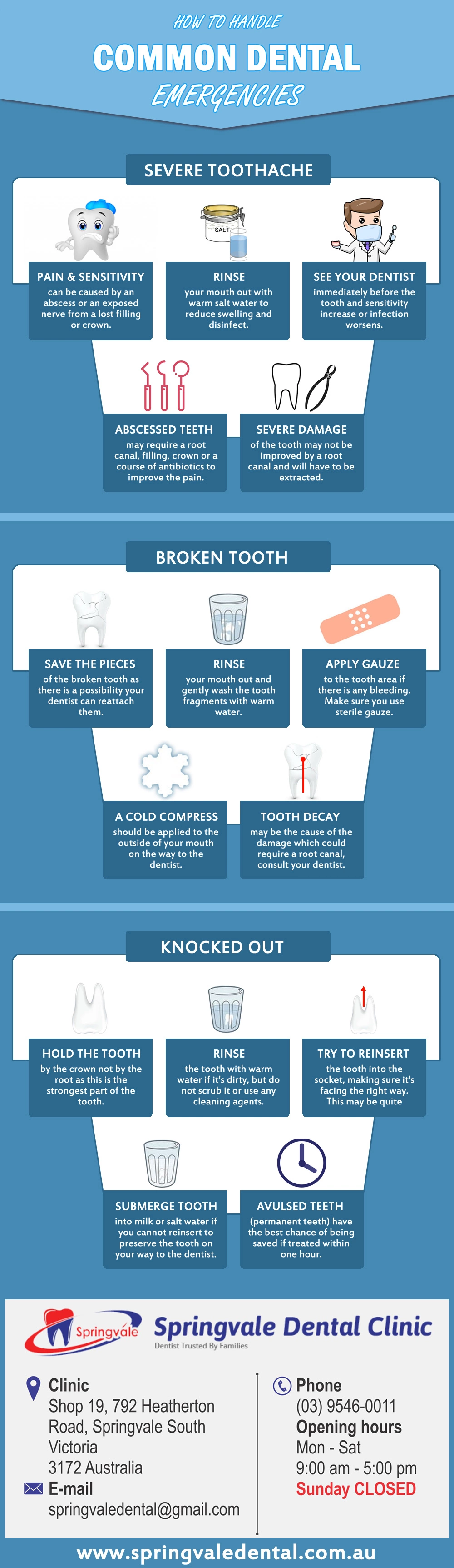
Severe Toothache
A throbbing toothache can be debilitating and is often a sign of infection or inflammation.
Immediate steps:
- Rinse your mouth gently with warm water to clean the area
- Use dental floss to remove any food particles trapped between teeth
- Take over-the-counter pain relievers like ibuprofen (avoid aspirin for bleeding injuries)
- Apply a cold compress to your cheek for 15-20 minutes to reduce swelling
- Never place aspirin or any other painkiller directly against your gums, as this can burn the tissue
If the pain persists for more than a day and is accompanied by fever, swelling, or an unpleasant taste in your mouth, seek professional dental care promptly, as these could indicate an infection.
Knocked-Out Tooth
When a tooth is completely knocked out, quick action may save it.
Immediate steps:
- Handle the tooth by the crown (the part that's visible in your mouth), not the root
- Rinse it gently with water if it's dirty, but don't scrub or remove any attached tissue
- Try to reinsert the tooth in its socket if possible, facing the correct way
- If reinsertion isn't possible, keep the tooth moist by placing it in milk, a tooth preservation product, or between your cheek and gums
- See a dentist immediately—ideally within 30 minutes, as the chances of saving the tooth decrease significantly after an hour
Chipped or Broken Tooth
A chipped or broken tooth may not always cause pain, but it can have sharp edges that irritate your mouth.
Immediate steps:
- Rinse your mouth with warm water
- Apply a cold compress to reduce swelling if there is facial trauma
- Cover the broken edge with dental wax (available at pharmacies) if it's sharp
- Take over-the-counter pain relievers if needed
- Save any broken pieces and bring them to your dentist
Even if there's no pain, see a dentist soon, as broken teeth are vulnerable to further damage and infection.
Lost Filling or Crown
When a filling or crown falls out, the exposed tooth can be sensitive and vulnerable to damage.
Immediate steps:
- For a lost filling, stick a piece of sugar-free gum into the cavity (sugar-containing gum will cause pain)
- For a lost crown, try to place it back over the tooth using dental cement, denture adhesive, or even toothpaste as a temporary measure
- Clove oil applied to the sensitive area may help with pain
- Avoid chewing on that side of your mouth
See your dentist as soon as possible to have the restoration properly replaced.
Dental Abscess
An abscess is a severe infection characterized by a pocket of pus in the tooth or gum. Symptoms include severe, persistent, throbbing pain, fever, facial swelling, tender lymph nodes, and a foul taste.
Immediate steps:
- Rinse with mild saltwater several times daily (½ teaspoon of salt in 8 ounces of water)
- Take over-the-counter pain relievers
- Seek emergency dental care immediately, as abscesses can lead to serious complications if left untreated
Never try to drain the abscess yourself.
Soft Tissue Injuries
Injuries to the lips, cheeks, gums, or tongue can bleed profusely due to the rich blood supply in these areas.
Immediate steps:
- Rinse with warm salt water
- Apply pressure with a clean cloth or gauze for 15-20 minutes
- Apply a cold compress to the outside of your mouth to reduce swelling
- For severe bleeding that doesn't stop after 15-20 minutes, go to an emergency room
Object Caught Between Teeth
Immediate steps:
- Try to remove the object gently with dental floss, moving it carefully up and down
- Never use sharp instruments like needles or pins, as these can damage your gums or scratch the tooth surface
- If flossing doesn't work, see a dentist
Prevention of Dental Emergencies
While not all dental emergencies can be prevented, many can be avoided or minimized through:
- Regular dental check-ups to catch potential problems early
- Wearing mouthguards during sports or recreational activities
- Avoiding chewing hard foods like ice, popcorn kernels, and hard candy
- Never use your teeth to cut things or open packages
When to Seek Emergency Dental Care
While the above measures can provide temporary relief, they are not substitutes for professional dental care. Seek emergency dental care treatment if you experience:
- Severe pain that doesn't respond to over-the-counter medications
- Swelling of the face or gums
- Signs of infection such as fever and general illness
- A knocked-out, loose, or broken tooth
- Bleeding that doesn't stop with pressure
Where to Get Help
At Springvale Dental Clinic, we understand that dental emergencies don't follow a 9-to-5 schedule. That's why we're proud to offer emergency dental services seven days a week, from 9 am to 5 pm. Our experienced team is equipped to handle all dental emergencies with compassionate care and the latest techniques.
If you're experiencing a dental emergency, contact us immediately at Springvale Dental Clinic, Shop 22, 792 Heatherton Road, Springvale South Victoria 3172, Australia. Remember that the sooner you receive professional care, the better your outcome will likely be—whether it's saving a natural tooth or preventing an infection from spreading.
Being prepared for dental emergencies gives you confidence and peace of mind. Save our contact information now so you'll be ready should an emergency strike occur.