Good oral hygiene is the foundation of a healthy smile, and proper brushing techniques stand at the forefront of this daily ritual. While most of us have been brushing our teeth since childhood, many aren't aware there's a right way to do it. Recent studies suggest that up to 30% of adults don't brush correctly, leading to preventable dental issues. At Springvale Dental Clinic, education is essential for maintaining optimal oral health. This comprehensive guide about how to brush will walk you through the fundamentals of effective brushing and highlight why it matters for your long-term dental health.
Before diving into technique, let's talk about equipment. Dental infographics consistently show that the right toothbrush makes a significant difference. Opt for a soft-bristled brush with a head small enough to reach all areas of your mouth, including those hard-to-access back molars. Stiff bristles might feel like cleaning better, but they can damage your gums and wear away tooth enamel over time.
The manual versus electric toothbrush debate continues among dental professionals, but research indicates that both can be effective when used correctly. Electric toothbrushes may be advantageous for people with limited dexterity or those who struggle with proper brushing techniques. Many electric models offer pressure sensors to prevent aggressive brushing and built-in timers to ensure adequate cleaning duration.
Regarding toothpaste, look for fluoride products, which strengthen tooth enamel and help prevent decay. For specific concerns like sensitivity, whitening, or gum health, consult your dentist about specialized toothpastes that address these issues. Remember that whitening toothpastes may be more abrasive, so they should be used cautiously if you have sensitive teeth or exposed roots.
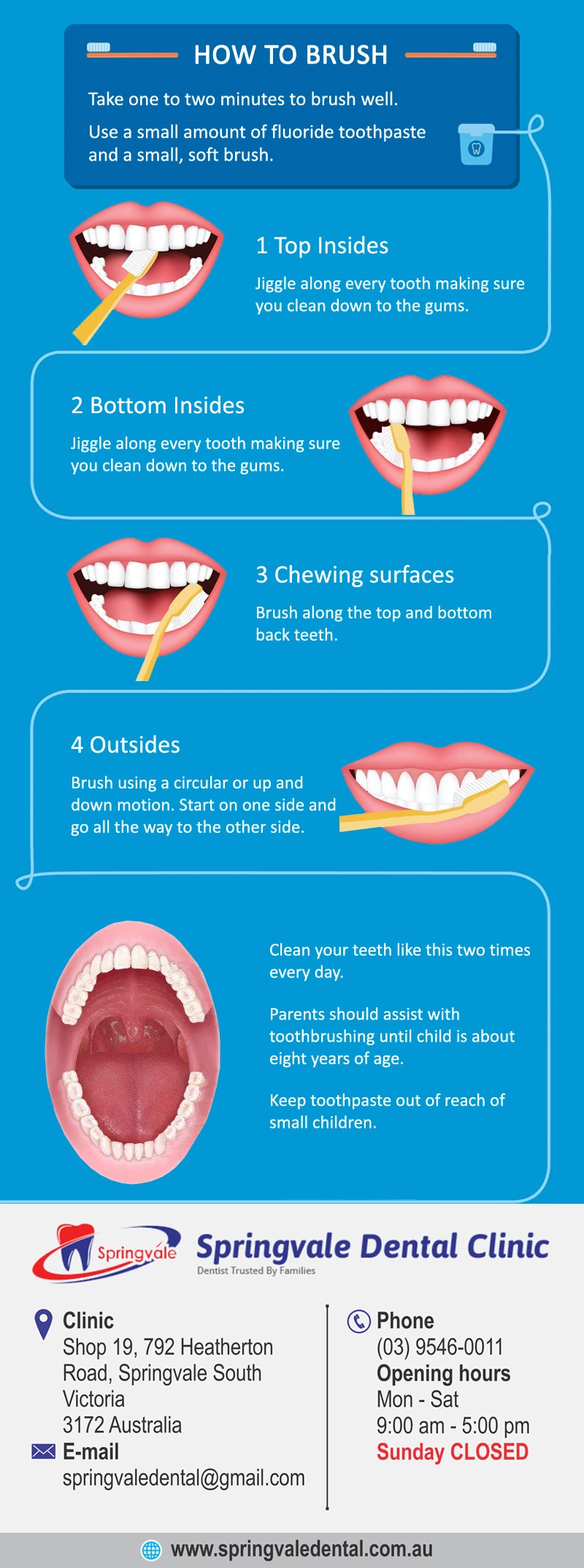
Proper brushing technique is more nuanced than many realize. According to dental infographics published by leading oral health organizations:
Remember that vigorous scrubbing doesn't equate to better cleaning. It can harm your gums and enamel. Gentle, thorough motions are far more effective and safer for your oral tissues. Visualize your mouth divided into quadrants (upper right, upper left, lower right, lower left) and methodically work through each section to ensure complete coverage.
Brushing frequency and duration play crucial roles in maintaining oral health. Dental professionals universally recommend brushing twice daily—once in the morning and once before bed. Each brushing session should last approximately two minutes, roughly 30 seconds, and be dedicated to each quadrant of your mouth.
Interestingly, studies show that most people brush for only about 45 seconds without timing themselves—less than half the recommended duration. Many modern electric toothbrushes feature built-in timers that pulse every 30 seconds, helping you track your progress. Alternatively, you can use a smartphone timer or count in your head. Visual dental infographics often divide the mouth into zones to ensure comprehensive coverage during your two-minute routine.
Children, adults, and seniors may require slightly different approaches to brushing:
Parents should assist children with brushing until they develop the manual dexterity to do it effectively, typically around age 7-8. Use a pea-sized amount of fluoride toothpaste for children under three and a slightly larger amount for older children. Make brushing fun through songs, timer apps, or rewards to establish good habits early.
Older adults may face challenges like arthritis that make brushing difficult. Modified toothbrushes with larger handles, electric toothbrushes, or adaptive aids can help maintain independence in oral care. Those with receding gums should pay special attention to exposed root surfaces, which are more vulnerable to decay.
Special orthodontic or interdental brushes may be necessary to clean around brackets and wires. Those with crowns, bridges, or implants should take extra care around these restorations to prevent plaque buildup that could compromise their longevity.
Even with the best intentions, many people make mistakes that compromise their brushing effectiveness. Watch out for these common errors:
Dental infographics frequently highlight that the areas most commonly missed during brushing are the inner surfaces of lower front teeth and the outer surfaces of upper molars—being mindful of these spots can improve oral hygiene.
While proper brushing forms the cornerstone of oral hygiene, it's just one component of a complete routine. Flossing daily is essential for removing plaque between teeth that your brush can't reach. Statistics show that only about 30% of adults floss daily, leaving many at risk for interproximal decay and gum disease.
Add an antimicrobial mouthwash to your regimen to reduce bacteria and freshen your breath. Interdental brushes and water flossers can be valuable additions for people with braces, implants, or bridges. Often featured in dental infographics about complete oral care, these tools help reach spaces that traditional brushes might miss.
Even perfect home care needs professional reinforcement. Regular dental check-ups and cleanings allow professionals to remove hardened plaque (tartar) that can't be eliminated by brushing alone and to identify potential issues before they become serious problems.
During a professional cleaning, your dental hygienist will use specialized instruments to remove tartar above and below the gum line, polish your teeth to remove surface stains, and provide personalized advice on improving your home care routine. These visits typically include a comprehensive examination to detect early signs of decay, gum disease, or other oral health concerns.
At Springvale Dental Clinic, we're committed to helping you achieve and maintain optimal oral health. Our team of experienced dental professionals provides personalized advice on brushing techniques and can recommend specific tools tailored to your unique needs. We offer comprehensive dental services ranging from preventive care to restorative and cosmetic procedures.
Conveniently located at Shop 22, 792 Heatherton Road, Springvale South Victoria 3172, our clinic welcomes patients seven days a week from 9 am to 5 pm. Whether you need a routine check-up, have questions about proper brushing technique, or require more specialized treatment, we're here to help.
Remember, excellent oral health is a partnership between your daily habits and professional care. By mastering proper brushing techniques and maintaining regular visits to Springvale Dental Clinic, you're investing in a healthier, brighter smile for years to come.