
Brown Stains on Teeth: Causes, Prevention & Treatment
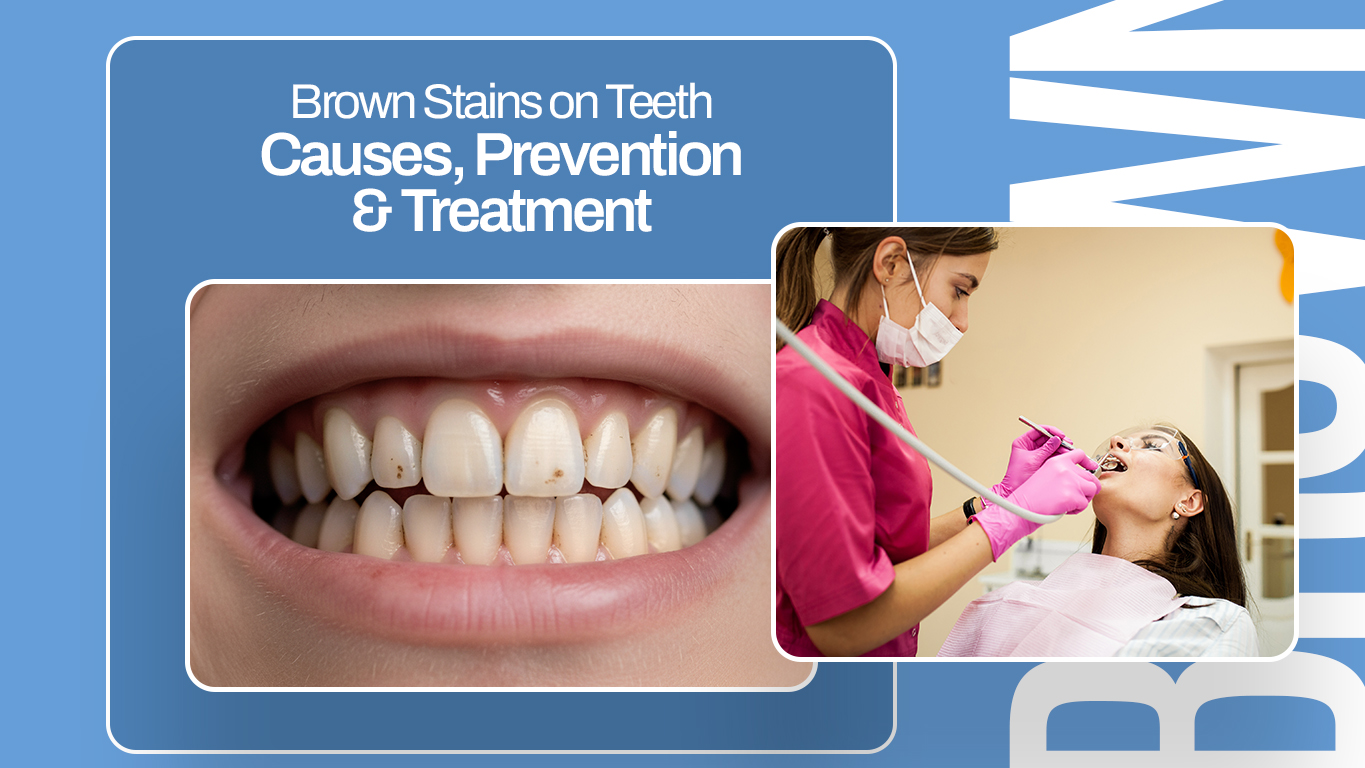
One of the most common issues that most individuals encounter is brown stains on teeth. These stains may be light or dark discolouration, and can negatively impact how you feel about your smile. With knowledge of what causes these stains, how to prevent them, and the most appropriate treatment, you will be able to maintain a healthy and brighter smile.
What are the Causes of Brown Stains on Teeth?
The formation of brown stains is a combination of external and internal factors. Externally, teeth are stained when they are left in contact with substances such as coffee, tea, red wine, and tobacco over an extended period. These products are filled with pigments that gradually diffuse into the small pores on the tooth surface.
Stains may be present inside the tooth due to factors such as medications, excessive fluoride, or even damage that alters the colour of the tooth. As we age, the enamel becomes thinner, and the yellowish layer below (dentin) becomes more prominent. Uncleaned teeth are prone to accumulating plaque, and stains are harder to remove.
How to ensure that teeth do not get stained.
Prevention of stains before they occur is largely a matter of good habits and prudent decisions:
- Brush your teeth using fluoride toothpaste at least twice a day. This helps in reducing plaque that holds onto stains.
- Floss your teeth every day to clean in between teeth, areas that cannot be brushed.
- Have your teeth professionally cleaned every six months to remove the hard-to-clean stains and tartar.
- Use a straw to prevent the liquid from coming in contact with your teeth when consuming staining beverages such as coffee or tea.
- Wash your mouth with water immediately after taking foods or beverages that cause stains. This helps in removing traces.
- Reduce staining beverages and foods.
- Avoid tobacco at all costs because it not only causes teeth stains but also damages your oral and general health.
Ways to Treat Brown Stains Professionally.
In case your teeth are stained, dental cleanings can help remove surface stains and tartar, which cannot be cleared at home. To achieve better outcomes, professional whitening procedures break down deeper stains. Dentists may accomplish this within a short time in the office or offer you take-home trays to whiten gradually.
In cases where the stains are not responsive to whitening, dentists may recommend alternatives such as veneers or bonding. These are applied over the stained tooth and they restore its natural colour.
Treating Stains at Home
A majority of individuals desire easy methods to whiten teeth in the comfort of their homes. Over-the-counter whitening agents are able to remove stains but, in most cases, are less effective than dental procedures. Whitening toothpastes can eliminate light surface stains but should not be overused to protect the enamel. Home remedies, including baking soda, must be applied cautiously and under professional guidance.
Conclusion
A combination of good daily care and dental treatments is the best way to manage the brown stains. In case you have any discolouration, the best way is to visit your dentist. They will help you identify the appropriate solution.
At Springvale Dental Clinic, we offer tailor-made cosmetic dental treatment that will restore your self-confidence. We will help you realise a bright, healthy smile that suits you.