
Why Are My Teeth Yellow When I Brush Them Every Day?
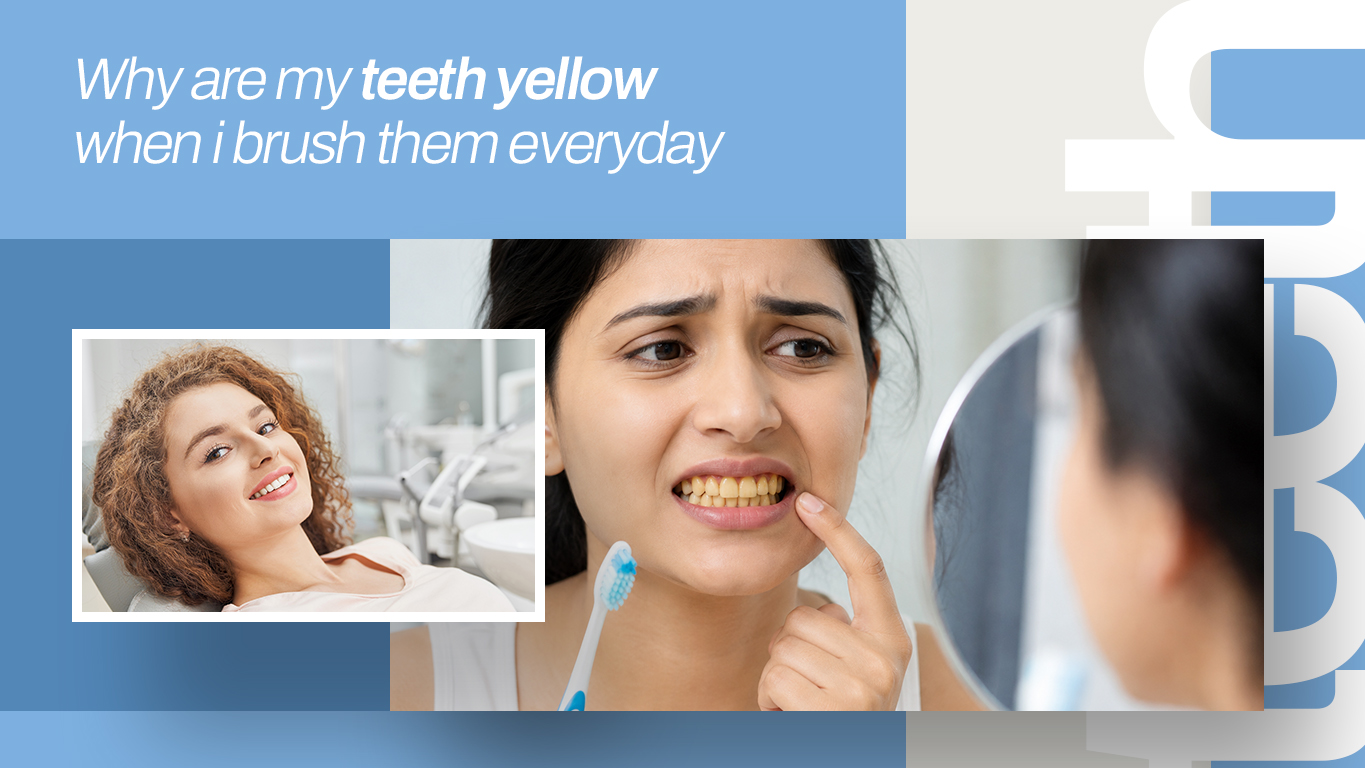
You brush twice a day, you floss (most days) and still you see yourself in the mirror wondering, “Why are my teeth so yellow?” One of the most frequently asked questions by dentists is why teeth become yellow, and the truth is that brushing is not enough to control all of the factors that cause teeth to be yellow. Let’s have a look at the truth.
Why Are My Teeth Yellow?
The colour of the teeth comes from two layers – the enamel and dentin beneath it. The dentin is naturally yellow and the enamel is translucent, which means that more dentin will be visible as the enamel wears down. Brushing clears the surface plaque and food debris, but cannot re-mineralize enamel loss or whiten dentin (yellow) below the tooth’s enamel surface. The primary reason of yellow color teeth despite maintaining good oral hygiene is because of this.
There are a few common causes of yellow teeth
- Foods and drinks that stain over time (Coffee, tea, red wine, curries and berries) all contain pigments which adhere to the enamel over time. While some surface stains can be removed with brushing, others get worse over time and require more than a toothbrush to budge.
- Smoking and tobacco use – Smoking is one of the quickest ways to get your teeth to turn yellow and brushing them every day doesn’t help.
- Age: As we get older, enamel wears down over the years and wears from acids that we have had in contact and chewing, which exposes more of the yellow dentin.
- Genetics – some people just have thicker, whiter enamel and others are born with thinner or yellowish enamel.
- Some antibiotics (such as tetracycline) prescribed to children as treatment and excess fluoride during tooth formation may result in permanent discolouration, such as yellow or mottled.
- A thin layer of plaque can be left behind when brushing is too fast, too deep, or isn’t thorough enough; this will yellow and harden to tartar over time.
Does Lack of Calcium Cause Yellow Teeth?
Yes, indirectly. Strong and dense enamel requires calcium. A long-term calcium deficiency may weaken enamel and make it more porous and prone to wear, making the yellow dentin below the enamel more visible. A diet that provides enough calcium and vitamin D helps to strengthen enamel, but it will not cure existing enamel discolouration.
How to Get Rid of Yellow Teeth
- Brushing at home can’t reach buildup plaque and tartar, which must be cleaned by a professional.
- Teeth Whitening treatments – These involve professional agents that will remove surface and deeper stains much better than whitening toothpaste.
- Improved brushing method – soft-bristle toothbrush, use correct angle, brush for 2 minutes, using fluoride toothpaste.
- Eating less food and drinks that are likely to stain.
- Smoking is one of the largest causes of yellowing, so quitting will stop this.
- Treating the underlying causes, including missing nutrients or enamel erosion, under a dentist’s supervision.
Conclusion
Yellow teeth usually have to do with staining, wearing down of the enamel, genetics or nutrition, and are not a direct result of how well you brush your teeth. The happy news is that a professional evaluation will be able to identify and determine the precise problem and the best solution to your smile.
If you are looking to find out more about your yellow teeth and what safe and effective whitening options are available, the Springvale Dental Clinic team can help you. Schedule a consultation today and enjoy a brighter, healthier smile.