
How to Stop Bleeding After Tooth Removal
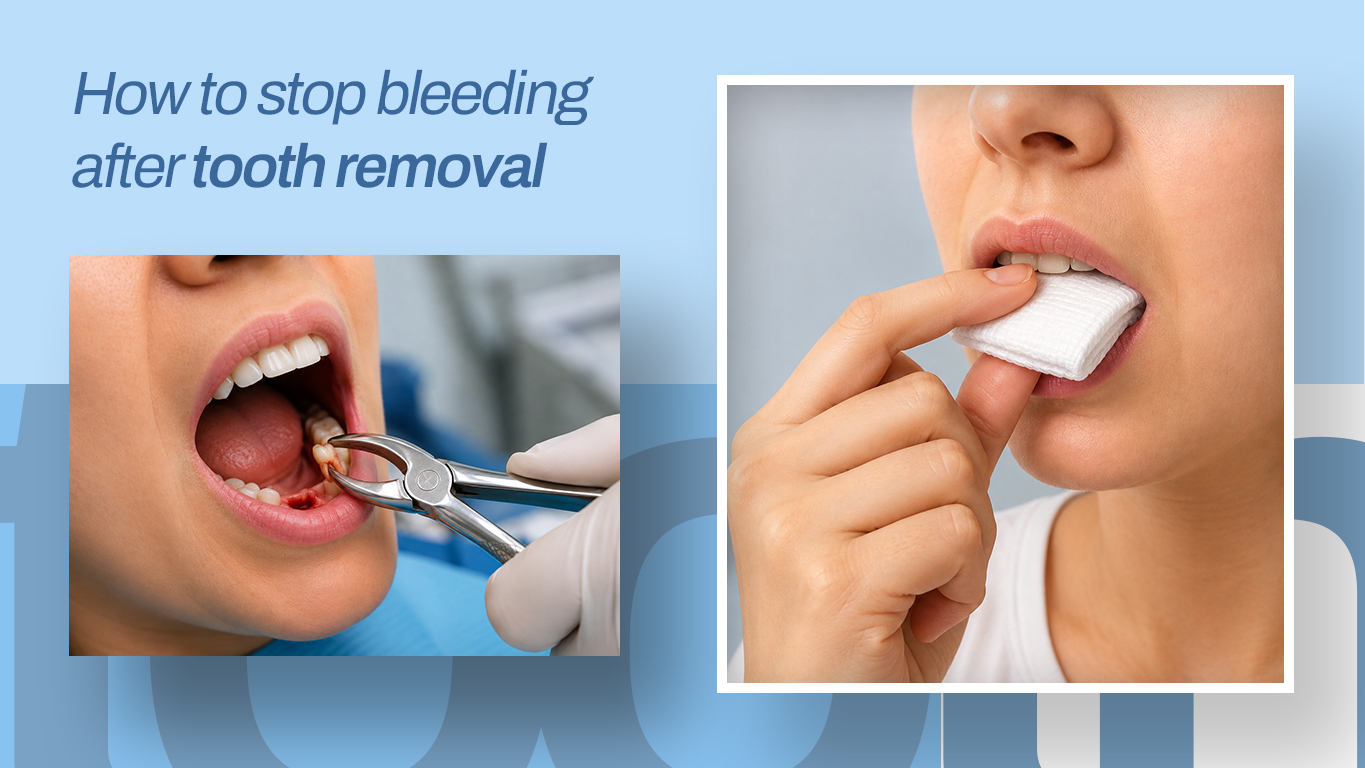
A little bleeding after a tooth extraction is normal. Your body is forming a blood clot in the socket, and that clot is the foundation of healthy healing. However, knowing the best way to stop bleeding after tooth removal can make the first 24 hours far more comfortable and help you avoid complications.
Immediately after the procedure
Your dentist will cover the gap with a gauze pack and have you bite down on it for 30-45 minutes. This pressure aids the blood to start clotting. Don’t poke at it every few minutes, because repeatedly removing the gauze can cause the clot to become disturbed and bleed again.
If the bleeding persists after the first pad, change the pad with another one and press again for another 30 minutes. It may help to put a moistened tea bag in the hole as well because the tannic acid in tea helps clot.
Bleeding after Wisdom Teeth Removal
The bleeding after wisdom tooth extraction is a little more visible than the bleeding after other tooth extractions due to the fact that wisdom teeth are usually deeper inside the jaw and the sockets are larger. It is natural to have a little oozing and blood-tinged saliva the first day after having the wisdom tooth removed.
What to do during this time to help heal:
- Keep your head elevated, even while sleeping
- Do not spit, rinse off hard, or use straws for 24 hours
- Eat soft and cold foods, but don’t eat anything hot or spicy.
- Avoid smoking – it can prolong recovery and may lead to bleeding problems.
Post-Removal of the Wisdom Tooth: When does the bleeding stop
It’s normal to have light pink-tinged saliva in the days following the wisdom tooth removal procedure; if the bleeding is bright red, it should slow down largely after 24 hours. Warm salt water rinses (beginning the day after surgery) keep the area clean and may be gentle enough not to interfere with the clot.
When It’s an Emergency
Sometimes bleeding doesn’t resolve as it should. If you experience any of these symptoms, you may need to have your wisdom teeth extracted or urgent dental treatment:
- Repeated bleeding after several hours through the gauze
- Heavy bleeding after a tooth extraction along with dizziness or weakness.
- Large blood clots in the mouth area
- Bleeding which occurs heavily one day or more after the procedure.
When any of these occur, do not delay; seek advice from your dental office immediately.
A Good Time to Ask Questions on Other Dental Concerns as Well
It is also an excellent time for you to ask other questions you may have had about them, such as “Can old dental fillings be replaced with new materials?” This is typically the case, and newer fillings may be more natural-looking and durable than older amalgam fillings.
Conclusion
Springvale Dental Clinic is here to assist if you are preparing for an extraction or feel you are bleeding out of the ordinary after the procedure. Our skilled team offers you gentle extraction, transparent aftercare information, and quick support in any emergency. Make an appointment with Springvale Dental Clinic today for a smoother, safer recovery.